Category: Content Marketing

  • Five Great Books That Guide My Approach to Content Marketing

    Five Great Books That Guide My Approach to Content Marketing

    It’s no secret that the best writers are often avid readers. One of the most frequent pieces of advice you’ll hear from writers of all stripes is that you should always be reading. But when it comes to content marketing, the influences are a little different. I’m always reading—I’ve made note of resources I visit on a regular basis—but as a former literature student and a creative writing major, I just really like books.

    I’ll admit that before I got into agency life, I didn’t read a lot of books about marketing. Definitely not about writing for the web. I was just kind of winging it. I didn’t really care about keyword research or density or search volume. And I couldn’t even begin to tell you about Google Analytics. But a few places have given me some mandatory reading to do. And as it turns out getting some homework—even as an adult—can help you learn a thing or two. Here are a few of my favorite books about writing for the web, marketing, time management,  and creativity in general.

    Steal Like an Artist by Austin Kleon

    Here’s a little secret about how I approach content marketing: I look at what competitors are doing. A lot. I look at how they’re phrasing things. What they’re talking about. Where they’re ranking for topics.

    And then I try to steal as much of what they’re doing and make it work for me (and my clients). 

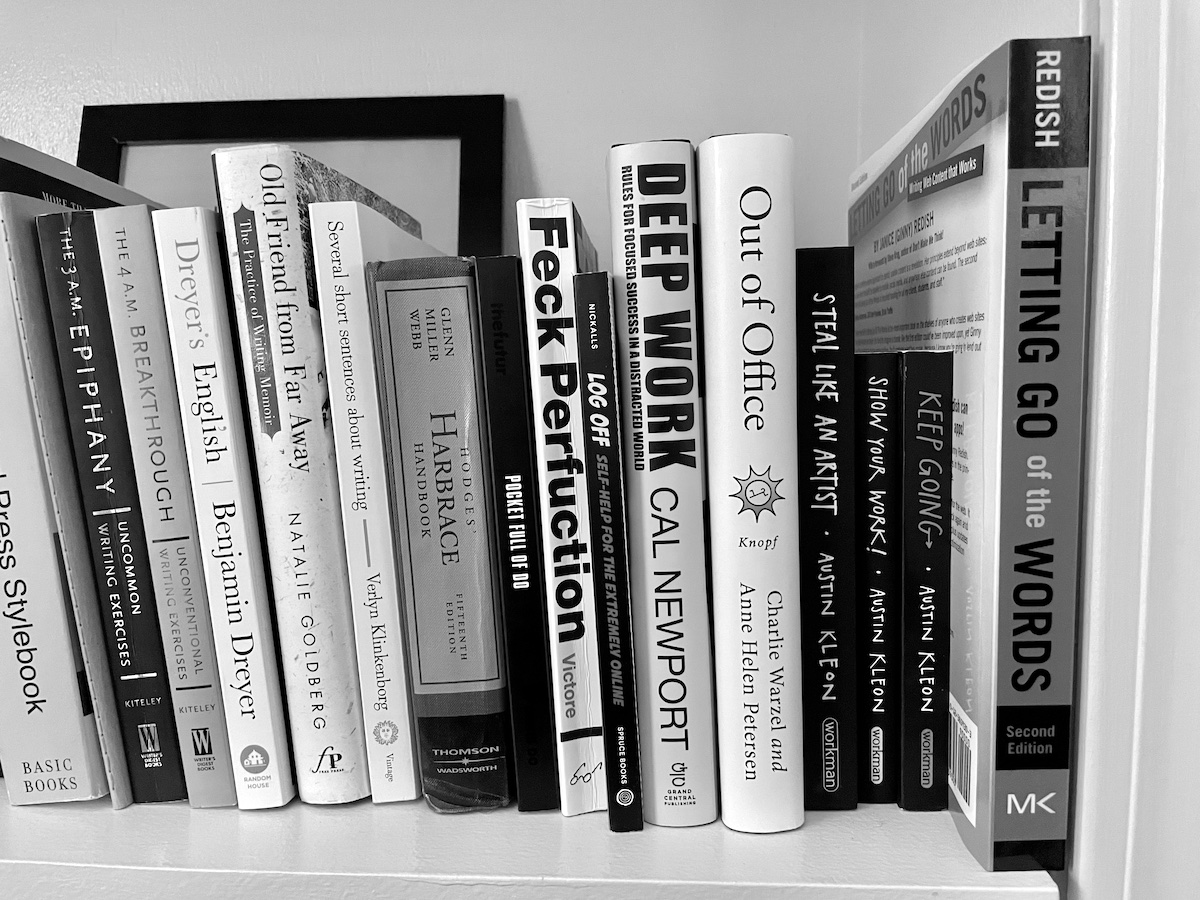
    It’s not plagiarism. It’s working smarter. And one of the places that I’ve learned the importance of doing that kind of creative pilfering is in the Austin Kleon book Steal Like an Artist. I recently picked up the tenth anniversary hardcover copy of the book, and it’s just as vital and fun as I remember.

    Steal Like an Artist is a fast read, owing to Kleon’s decision to make it a physically square book, but also because he’s a writer who draws. Each page is packed with usable advice, but there are also plenty of fun doodles and scribblings to take in. Kleon’s an expert on creativity and a great follow on Instagram for insights into how he works. If you’re looking for a person to help guide you to good things to read and think about, his newsletter is an excellent place to start.

    Don’t Make Me Think by Steve Krug

    Don’t Make Me Think by Steve Krug focuses on the intersection of usability and making things easier on the person navigating your website. It’s ostensibly a text geared more for web designers and developers, but I’m a firm believer that content marketers and writers should have a good understanding of how things need to be laid out on a page for maximum effectiveness. 

    I’ve worked in spaces where the designer just kind of makes decisions about where content lives and how much space it gets. I’m a firm believer in the idea of collaboration during the design process as opposed to giving one person the baton and asking them to run ahead. If you’re not thinking about how users will actually read and interact with your content, you’re not doing a good enough job as a writer.

    Letting Go of the Words by Ginny Redish

    I’m wordy. I know it’s a problem. And I have a hard time stopping. But one book that helped me understand why it’s important to give as much information in as short a period of time is Ginny Redish’s Letting Go of the Words. This book has been around for ten years, but it’s jam packed with useful information about how to structure content for maximum impact for SEO.

    One of the things I liked the most about this book when I read it a few years ago is that it’s a fast read, even though it’s a pretty dense tome. You’ll find lots of clear examples of content (both good and bad) as well as explanations why the examples work (or don’t). Don’t let the price tag put you off: even though SEO changes constantly, a lot of the rules in this text are still standard best practices today.

    Start With Why by Simon Sinek

    Disclaimer: I used to hate Simon Sinek. Just utterly despised him. And a big part of that is due to a video that was making the rounds a few years ago about how coddled Millennials were. But if you dig into Start With Why (or the TED Talk that shares its primary thesis), you’ll find a lot of great insights about why and how companies succeed or fail based on vision and purpose.

    This one may not have a lot to do with the nuts and bolts of content marketing, but it’s an inspirational text for anyone who owns a business (or, if you’re like me, trying to get one off the ground). 

    Deep Work by Cal Newport

    I’m easily distracted. I will stop writing at least once every 15 minutes to look at my phone for another five, or to see if any new updates have been posted to one of the dozen websites I visit throughout the day for news and commentary. I’m not great when it comes to self control, but I’m trying to get better. A big part of that is reading Deep Work by Cal Newport.

    Now I don’t necessarily know if I agree with all of Newport’s thoughts on social media, distraction, and focused work. Sometimes he comes off as a little sanctimonious, especially when he reminds the reader (frequently) that he’s never had a social media account and was forced by his wife to get a smartphone after much arguing against it. But if you’re someone who struggles with concentration, this one is worth a read. And if getting away from social media piques your interest, his follow-up Digital Minimalism is a good one to read, too.

    Find a book you’re excited about finishing.

    One common theme in all of these books is that they were things I either couldn’t put down, devoured quickly, or simply wanted to finish reading. If you’re looking for a resource to help you level up your business or find some personal growth, there’s no shortage of books out there. There are honestly probably too many. But the ones listed above have been really helpful to me as I work with my agencies and clients.

    What books have you found most helpful as you build your business? Which ones would you suggest to someone trying to build an agency? Leave a comment with your favorite and link to it—preferably from your favorite local store.


    Want to learn more about my content marketing process and how I can help you turn around your blog program for as little as $5,000? Shoot me an email.

    I’m part of the affiliate program at Bookshop.org. Purchasing any of the above books through the links I’ve provided here will earn me a small commission.


  • Six Signs You Need a Content Marketing Makeover

    Six Signs You Need a Content Marketing Makeover

    What’s your current content marketing strategy? When was the last time you updated your website to reflect your current business offerings? Who is the intended audience for your informational blog or resource content?

    Don’t know the answers to those questions? You’re not alone. Many business owners have websites that desperately need a content marketing makeover. The difference between them and you is that you’re already looking at ways to refresh the written information on your website.

    If you’re looking for a sign, this is it. Well, six of them actually. Let’s talk about why you need a content marketing makeover.

    1. Your content is filled with errors and lacks polish.

    If you’re cringing reading this, it’s time for a content makeover. Errors in grammar, spelling, and punctuation are not only embarrassing but can make your business look less professional. If it’s been a while since you ran spell check or brushed up on grammar rules.

    2. Your website copy doesn’t address the needs of your customers.

    When someone visits your website, they should be able to quickly and easily find the information they need. If your website copy is hard to read, lacking in detail, or just doesn’t make sense, it’s time to get under the hood and change some things.

    3. Your headings and subheadings are a hot mess.

    The way you format your text can be just as important as the actual words themselves. If your headings and subheadings are all over the place, it’s time for a content refresh. Not sure how to format your text for maximum readability? Hire a professional writer or editor to help you out.

    4. It’s been years since you’ve updated your content.

    If the last time you updated your website was when Obama was first elected—trust me, I’ve seen examples of this today!—you need to take the time to audit your content. Outdated images, poorly written blog posts, and information that is no longer accurate can all be signs that it’s time to give your website a facelift.

    5. You have data to support a content refresh.

    Review your Google Analytics data to see which pages are performing well and which could use some improvement. Poorly performing pages can benefit from a content refresh, if not total removal from your site. Pay attention to entrances and time on page. The former will give you a good idea of how many people are coming to that page from the search engine results page (SERP). The latter will help show you how long folks are sticking around. If you’re not sure how to interpret your analytics data, hire a professional (I know a guy…) to help you out. Speaking of the SERP…

    6. Your competition is crushing you on Google.

    If you’re not ranking where you want to be, it’s time for a change. Take a look at your competition and see what they’re doing that you’re not. Are they blogging? Creating infographics? Optimizing their website for the right keywords? Whatever they’re doing, you need to do it better.

    Book some time to talk about a content makeover today.

    A content marketing makeover is a big job, but it’s one that’s worth doing if you want your business to succeed online. By freshening up your website copy, addressing the needs of your customers, and making sure your content is error-free, you can take your business to the next level.

    Are you ready for a content marketing makeover?   Reach out to me by email today with a link to your site. We’ll talk about the budget and timeline and get you well on your way to the content refresh your brand deserves.

  • Why Accessibility Matters when Writing for SEO

    Why Accessibility Matters when Writing for SEO

    When writing for SEO, it’s important to understand accessibility standards. Search engines pay careful attention to how useful content is, but they also look at elements like readability. By using elements like clear headings and subheadings, bulleted lists, and chunking content into smaller sections for easier scanning and scrolling, you can positively impact not just the user experience on your page, but also the performance of your content in search engines.

    What is accessibility?

    Accessibility means making sure your content can be easily consumed by as many people as possible. This includes people with disabilities who may use screen readers or other assistive technologies to consume your content.

    Why is accessibility important?

    Accessibility is important for two reasons: first, because it’s the right thing to do. Everyone deserves equal access to information. Second, accessibility can positively impact your SEO performance.

    How does accessibility impact SEO performance?

    Search engines are designed to deliver the best possible results to users. That means giving users what they want, which includes content that is easy to read and understand. When your content is accessible, it’s more likely to be consumed and therefore ranked higher in search engine results pages.

    What are some accessibility elements writers should consider?

    There are a few accessibility elements writers should consider when writing for SEO:

    • Chunking content: Breaking up your content into smaller sections makes it easier for users to scan and scroll. This is especially important on mobile devices where users are often scrolling through pages quickly.
    • Using clear headings and subheadings: Headings and subheadings help users understand the hierarchy of your content. They also make it easier to scan pages for specific information.
    • Alt text for images: Alt text is important for two reasons: first, it helps users who are using screen readers understand what’s on the page. Second, it helps search engines understand what’s on the page.

    What resources can I use to learn more about accessibility?

    If you want to learn more about accessibility, there are a few resources you can use:

  • Why Your Business Needs High-Quality Content Marketing

    Why Your Business Needs High-Quality Content Marketing

    For businesses that rely on search engines to be seen before their competitors, finding a way to differentiate yourself can be hard. Luckily for these businesses, high quality content is a cost-effective way to inform both prospective and existing customers. By working with an expert content marketer to write this content, you can free up time and energy to focus on what really matters: serving your customers and clients.

    How content marketing works.

    When it comes to content marketing, quality is key. By having several pages worth of well-written and informative content on your website, you’re letting Google and other search engines know that your site is a valuable resource. This, in turn, will help you rank higher in search results pages – making it more likely for people who are searching for what you offer to find your site first.

    But content marketing isn’t just about search engine optimization (SEO). It’s also about conversion optimization – making sure that the content on your site is effective in converting visitors into leads, and then into customers.

    Types of Content

    There are many different types of content marketing that businesses can use to reach their target audiences. Some of the most popular types of content marketing include blog posts, articles, infographics, videos, and more.

    Each kind of content has its own unique benefits that can help businesses achieve their marketing goals. For example, blog posts can be used to drive traffic to a website, while articles can be used to build credibility and thought leadership. Infographics can be used to increase brand awareness, while videos can be used to engage and educate audiences.

    The best way to determine which type of content is right for your business is to experiment with different types and see what works best for your specific goals. There is no one-size-fits-all solution when it comes to content marketing, so don’t be afraid to try out different strategies until you find something that works for you.

    How content marketing impacts the sales funnel.

    Consider the different stages of the sales funnel/customer journey:

    • Awareness (top of the funnel): Prospective customers become aware of your brand and what you offer.
    • Consideration (middle of the funnel): They compare your offering to that of your competitors.
    • Decision (bottom of the funnel): They decide whether or not to buy from you.

    Content can play a role in all three stages. For example, let’s say someone is searching for a new pair of running shoes.

    If your content is ranking high in search results, they’re more likely to become aware of your brand. If your content does a good job of highlighting the features and benefits of your shoes, they’re more likely to consider buying from you. And if your content provides a coupon or discount code, they may be more likely to make the decision to buy from you over your competitor.

    How quality blog content can impact your search position.

    The benefits of content marketing don’t stop there. In addition to helping you rank higher in search results and convert more prospects into leads, high-quality content can also help you close more deals and build relationships with existing customers.

    When it comes to business blogging, quality is key. By working with an expert content marketer, you can ensure that your blog content is informative, well-written, and optimized for search engines. This will help you attract more visitors to your site, convert more leads into customers, and build stronger relationships with your existing customers.

    But I’m not a professional writer—how do I build a content program?

    The good news is, you don’t have to be a professional writer to create high-quality content. There are plenty of content marketing agencies and freelance writers who can help you develop a content strategy and write articles that will inform and engage your audience.

    You need a dedicated content marketing expert.

    If content marketing is so effective, why not just do it in-house?

    There are a few reasons why you might want to consider working with an expert content marketer, as opposed to trying to do it all yourself or relying on someone who’s not a true expert.

    First, content marketing and blog writing is time-consuming. If you’re already stretched thin, trying to add one more thing to your plate is likely to backfire. Second, content marketing requires a certain level of expertise. A content marketer will have a deep understanding of how to research and write content that’s both informative and keyword-rich – something that can be difficult to do if you’re not a trained writer.

    Finally, content marketing is an ongoing process. In order to be effective, you need to consistently produce new content. If you’re not able to commit to a regular publishing schedule, working with a content marketer can help ensure that your content marketing efforts are still successful.

    Finding an expert content marketer.

    If you’ve decided that content marketing is right for your business, the next step is to find an expert content marketer who can help you develop a strategy and produce high-quality content.

    Here are a few places to start your search:

    • Content marketing agencies: There are plenty of content marketing agencies out there that can help you get started. Do a quick Google search or browse through content marketing directories like The Content Marketing Institute or Contently to find a few agencies that might be a good fit for your business.
    • Freelance writers: If you’re looking for someone to help you with specific pieces of content, working with a freelance writer is a great option. You can find freelancers by searching content marketing job boards or reaching out to writers you know personally.
    • Social media influencers: If you’re looking for someone to help promote your content, working with a social media influencer could be a good option. Influencers have built-in audiences that they can share your content with, which can help you reach a larger audience than you would be able to on your own.

    If you’re considering content marketing agencies or freelance writers, be sure to look for someone who has experience creating content for businesses in your industry. This will help ensure that they understand your target market and can write content that’s relevant to them. Social media influencers can be a good resource, but the market is saturated with people who pretend to know what they’re doing.

    When it comes to business blogging, quality is key. By working with an expert content marketer, you can ensure that your blog content is informative, well-written, and optimized for search engines. This will help you attract more visitors to your site.

    Hire me for your content marketing needs.

    If you’re looking for help with your content marketing efforts, I’d love to chat. Send me an email and we can discuss how I can help you create a content marketing strategy that works for your business.

  • 4 Daily Must Reads for Content Marketers

    4 Daily Must Reads for Content Marketers

    laptop open with a program open on the screen, text of post title overlaid on top that says four must reads for content marketers: resources to elevate your content strategy

    As a content marketer by day, I’m always interested in finding new resources to help grow my business and provide better results for my clients. But there’s so much information out there. If you’re brand new to the field—either because you’ve made a midcareer pivot or because you’ve been asked to develop your company’s strategy—you might feel a little lost.

    When looking for advice, how do you know what’s best practices and what’s just wishful thinking? Who do you look for when it comes to thought leadership? Let’s check out four great resources I read every single day to help influence my content strategy work, and talk about why new content marketers should bookmark them immediately.

    My Daily Content Marketing Reads

    Search Engine Land

    The first thing you need to learn about content marketing is that SEO is a huge component, and one of the best places to glean insights is Search Engine Land. An absolutely vast depot of information, Search Engine Land provides daily updates on industry trends, Google algorithm updates, expert advice, and—if you can afford it—regular conferences where you can connect with leaders and experts across the whole digital marketing spectrum. It’s not just useful for content marketers, either. PPC managers, social media, and other digital marketing pros (and aspirants alike) can learn a lot from them.

    If you’re looking for a place to start, I recommend checking out the Periodic Table of SEO Factors. It’s a good overview of all the elements that can influence a site’s position on the search engine results page, and you’d be surprised (or not, if you know the score) how many of these items are explicitly related to content.

    HubSpot

    HubSpot’s primarily known as an inbound sales and marketing SaaS, but there’s no shortage of valuable resources to borrow from on their site. From a blog ideas generator to templates for resources such as blog posts, infographics, marketing plans and invoicing (great for freelancers), HubSpot provides plenty of tools to help content marketers develop a strategy. 

    While their marketing blog is absolutely rich in scope, one of the best values they offer is a full selection of eBooks on  topics as varied as brand stories, buyer personas, or—perhaps most importantly—this full content marketing strategy guide.

    If there’s a downside to HubSpot, it’s that their marketing and sales strategy involves sharing these resources in exchange for your email address and other contact information. But if you can get past that, you’ll find plenty of things to like.

    Semrush Blog

    Semrush’s full suite of tools is powerful for SEO professionals, content writers, and anyone else interested in digital marketing. I use them for keyword research and planning on a daily basis! But even if you’re not subscribed to them (they’re pretty pricey, especially for freelancers getting started), you can still get some big value out of it. I just pulled up their blog this morning and four of the six items on the first page are all related to content marketing. Much like the other resources on this list, Semrush can give you a huge boost in knowing what, how, and why to approach your content strategy in a specific way.

    Moz

    Moz, in addition to a powerful set of tools for SEO pros, offers an astoundingly useful beginner’s guide to SEO and a blog that features regular insights from industry leaders. Their Whiteboard Friday installments are rarely boring and prove the adage that presenting information in different ways can help others learn more effectively.

    Honorable Mentions for Content Marketer Resources

    Flipboard

    My wife introduced me to Flipboard years ago as a way to cultivate a sort of magazine to read for your tablet, but its real value these days is as an aggregator for content ideas. Follow various industries related to your clients (or the topic of content marketing as a whole) and make it part of your regular reading.

    Google Alerts

    I have Google Alerts set up for each of my company’s major verticals as well as topics I’m interested in related to content development. As it turns out, however, this tends to both clutter up my inbox and provide less useful ideas than going directly to the above resource. Still, it might be useful if you want news and updates delivered straight to your inbox.

    Honey Copy

    Cole Schafer is the guy who has inspired me to start freelancing again, and while he’s not exclusively a content marketer, he offers a lot of great insights. Cole, like me, is from southern Indiana. He’s got this whole outlaw vibe going on, so if you’re skittish on someone who cusses a lot you might not find him that useful. Sign up for his newsletters and—if you hate your job—check out his curated job postings. The dude lives for and loves advertising, and he makes a killing doing it.

    Have more content marketing questions? Let’s talk.

    Are you new to content marketing? Are you looking for someone to help develop your strategy? I’ve been working in this field for the past six years, and I’ve learned a lot along the way, both from mistakes and big wins. If you need advice from someone who’s actively working in the field or you’re in the market for someone to help with your project, I want to talk to you. Reach out today.