this was going to be a twitter thread but I decided to just post it here instead
Being a parent right now is a swirling maelstrom of anxieties on top of anxieties. You need to be concerned about all kinds of things from Covid to developmental milestones to making sure he has friends to what kind of world will be here in 10, 15, 20 years due to climate change.
But the biggest thing right now the way this country trivializes guns and violence is absurd. It is tragicomedy writ large. There are people who would have us return to the unfettered chaos of the fictional Wild West, where everyone carries and shoots first.
There are people who conflate worship of god with the worship of the gun and view both as sacrosanct. And at the same time they will stand outside medical clinics and scream at women for exercising their right to vital, necessary healthcare in the form of abortions.
I do not know how to proudly wear the mantle of \”pro-life\” while also worshiping at the altar of the ArmaLite AR-15 and all its variants.
I don\’t know how it\’s possible to sit in a church pew on Sunday morning and listen to the message of peace and love made human as Christ and then go on down to Frontier Justice or wherever to pick out the newest way to put face-sized holes in a child\’s head.
I take gun ownership seriously as an erstwhile gun owner. I haven\’t touched one in nearly 15 years, I don\’t think, and when I did it was a 20-gauge shotgun exclusively for rabbit hunting or for shooting at clay pigeons.
I play violent video games (currently going through Sniper Elite 5) on a regular basis. But I try to avoid it in front of Benji. Sometimes he catches a glimpse of Diablo 3 while I\’m on the couch with my Switch. A few days ago he watched me play the new TMNT game for a bit.
Our TV, when it\’s on during the daytime, is usually tuned to kids\’ television (Nick Jr. or Disney Junior) or sports. We try to avoid anything overly objectionable.
Anyway, we\’ve tried not to trivialize guns in our house. We don\’t talk about shooting people or engage in any kind of \”gun\” play. Hell, we try to even shut down finger guns as much as possible.
I grew up around guns and understand that they do, in fact, have a place. Hunting is a legitimate purpose. Rural police response times are another. But there are guns that have no place in the home or the streets or the grocery store.
We don’t have a gun in our home because we do not need one. I live in the suburbs. I don’t hunt. And more importantly I do not want little fingers to find the trigger.
I know people who bring a gun with them on long car trips, ostensibly for safety reasons. I know others who carry it into the grocery store despite being told not to. “Criminals won’t listen to the law,” they say as they…break the law?
Anyway, I\’ve been thinking a lot lately about the Maggie Smith poem. You know the one. \”Good Bones.\”
I am tired of it. I am exhausted by whispering its litany under my breath every single day while one group in this country marches onward, Christian soldiers, toward fascism.
I am bereaved at the seeming inability of the opposition to take control of this moment and stamp on the head of it like Jesus stomps on the head of the snake in Mel Gibson\’s \”Passion of the Christ.\” A vision that is seared in my memory as a result of watching its trailer a thousand times at every single church conference I attended from 2002-2003.
I have a thousand frustrations that curdle up in my guts every single day, a constant refrain of angry thoughts about how we treat the poor and the sick and the marginalized.
I don’t know how much longer I can talk up this place’s good bones as fascists proudly take up sledgehammers to knock away the footings and the joists and the load-bearing structures that tremble a bit more with each swing of the hammer.
This place has good bones, yeah, but the thing about bones?
The following essay originally appeared as a timed exclusive for my Patreon readers on April 17, 2021.
Did you know that even though I’m 34 years old, I’m truly, deeply passionate about the idea of playing pretend?
If it wasn’t obvious based on my penchant for indulging in hyperbole as an adult, I should be honest and admit that I was always a dramatic kid. I loved acting and took every opportunity I could to find my way up onto a stage. But I also deeply enjoyed writing. Whether it was coming up with short stories inspired by the movies, video games, and comics I wrote, or writing plays for my friends to act in, I took every opportunity to come up with fantastical stories. And if I could engage in that behavior on the playground, in the shared mythology of Power Rangers or G.I. Joe? All the better.
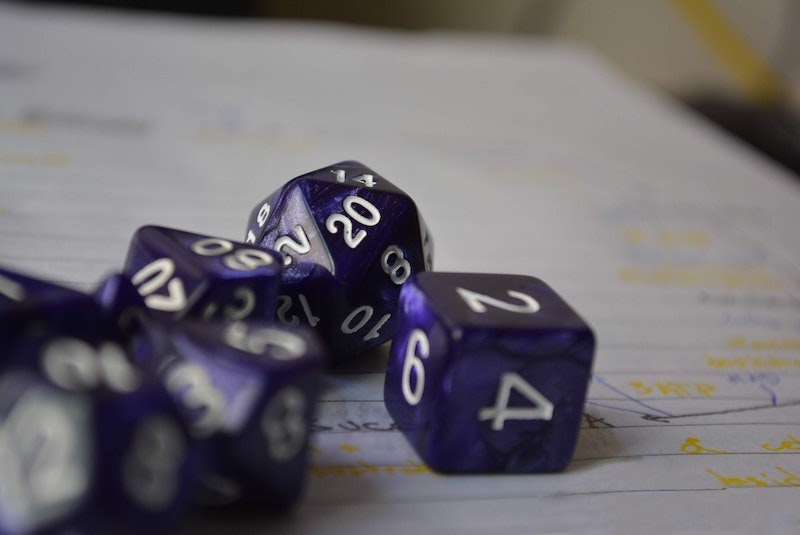
The thing is, I still enjoy playing pretend. But because I’m an adult, it just looks a little different. My version of pretend doesn’t happen on a playground, of course. It takes place around a table. But before I learned how to sit down with friends and share the joy of storytelling, I was first introduced to roleplaying via a wholly different way: pretending to be someone else on the internet.
“On the internet, you can be anyone you want.”
I first got into online roleplaying in 1999. I’d read articles about EverQuest, the first truly popular MMORPG, but owing to being 13, having no money of my own, and a fairly unreliable dial-up internet connection, I never got the chance to play. I was big into games like Final Fantasy and would devour any anime I could get my hands on, so the idea of taking part in an online world filled with strange friends and foes sounded like a lot of fun. I just couldn’t actually take part.
At one point, my friend Jeffrey—who I’d really only met a few months earlier as three sixth grade classes combined into one seventh grade contingent—brought up a thing called Chathouse. It was populated by a bunch of other nerds, basically, who got together and pretended to be all kinds of fantasy and anime avatars; some original, some less than. There were marriages and alliances, conflicts and capers. A whole cast of characters to meet and interact with, and every single one sharing in a (loosely) connected series of rooms/locations. Jeffrey told us about his character, Quentin Van Haten—also known affectionately as JonesMaster—a powerful magic user who wielded a broadsword and taught apprentices.
My interest was piqued. I wanted in. Jeffrey shared the address for the website and I anxiously awaited the chance to go home, sign into America Online, and start this whole new adventure.
I came up with my character on the fly, modeling him more or less on the appearance of my favorite anime character—the titular D of Vampire Hunter D—and waited for Jeffrey to sign into Chathouse so we could start figuring out how to integrate my character, Lucrenather, into the larger Chathouse milieu. More often than not, I’d sit down at my desk, sign into the chat, and type the following:
The doors open, and a cold wind blasts through as the man in the long blue cloak steps inside. As they close behind him, the patrons of the tavern all look up to take notice. He brushes back his long dark hair from around his eyes and makes his way to a table. He takes his customary seat, orders a drink, and sits back to observe the crowd. Sheathed at his hip is the Blade of Purity, a faint green glow emanating even through the leather that wraps around it. As he takes a drink from a large jug that is brought to him, Lucrenather Maiaran waits for something interesting to catch his eye.
I must have written some variation of those words hundreds of times before I got wise to using “copy and paste” to keep them close at hand in a WordPerfect document. That was always the introduction to the paladin, Lucrenather Maiaran, who sought to punish evil and avenge the deaths of his family at the hands of a corrupt uncle whose name I can’t remember. Every night after school—and sometimes during the day on weekends—I would routinely sit down at my desk (or on the bed at my grandmother’s house) and play pretend with this loose collective of friends and strangers.
We came up with the idea that my character would be JonesMaster’s apprentice. In character, he’d introduce me to notable people and help me forge my own alliances. Out of game, he’d send me emails with “spell lists and weapons” that I could use during the battles and duels that would occasionally take place in the chat. There was even a whole system that had been devised for settling conflict, the Thrall Ryne Battle System, which rewarded fast typing. There were other methods of conflict resolution—including one in which characters took turns describing their actions in lengthy prose sections—but TRBS was, for a long time, the rule rather than the exception.
It didn’t take long to instantly fall in love with the whole process. Because the entire place was one giant collaborative storytelling exercise—specifically through writing, which I also loved—I fell into the routine of logging into Chathouse as much as possible, sometimes to the detriment of schoolwork. I came up with even more characters, some of whom I still explore through other games such as Dungeons & Dragons, including the villainous sorcerer Varigas or the young wayward swordsman known as the Eldric Kharhaz.
When Chathouse went down for maintenance or server issues—as it did, first infrequently and then for good—the action moved to the Anime Capsule chat. Roleplaying bounced between these two venues, populated by many of the same faces. The Cap, as it was affectionately known, had more robust systems built-in. Automated dice rollers, a system for rock, paper, scissors, and even a whole MUD were built into the chat.
If there’s one sad thing about my time playing online, it’s that I came into the hobby at the very end of it. Most of the people I’d spent time playing with were a few years older than me—or even older, in some cases—and as lives got busy, they aged out of the game. After a while, spaces were completely devoid of the usual dark figures in darker corners. Eventually, the whole thing kind of faded away.
Despite only playing for a few years, the experiences in Chathouse and the Cap have stayed with me a long, long time. For starters, I type ridiculously fast. But more importantly, Chathouse regularly kept me thinking about writing; whether it was character development, plotting, or simply the often-difficult logistics of managing placement and positioning during a fight, you had to think on your toes and be willing to compromise with the other participant to create something dramatic.
I don’t write much fantasy fiction these days, but I still think fondly on the characters I both inhabited and spent time with as a teen. I still even keep in touch with a few of the folks from the CH and the Cap, but never in a capacity that involves online RP. Sometimes that’s sad, but that’s honestly just life.
What Jesus and Vampires Have in Common
Travis was intimidating. He was tall and funny, a senior, and—through a church youth group that I’d been invited to at least a half dozen times—he was friends with my friends. We struck up a conversation at a football game, and he mentioned something about playing White Wolf RPGs. I was familiar with White Wolf and their flagship game, Vampire: the Masquerade, through conversations with people in Chathouse who’d played it. But I’d never had the chance to myself. As Travis talked, I figured out that I liked hanging out with him. He kind of took me under his wing, so to speak.
Even though we started hanging out regularly—including as part of the church’s youth group, which I ended up joining— it took forever to convince Travis to let me join their roleplaying group. Part of it was my curfew, I think, but the other part of it can be chalked up to youth. Eventually, though, they let me in. It happened about the same time that the first Lord of the Rings movie came out. The fresh new fantasy film filled our heads with ideas, and we decided to play a (roughly adapted) Dungeons & Dragons campaign that…promptly fell apart within three weeks when no one’s schedules allowed them to get together to play in Travis’s game.
I had the itch, however, and I started collecting books left and right. Books on Vampire, the game that, to this day, is among my favorites, but also D&D source books and the occasional pirated PDF. It actually and it wasn’t too long before I was running my own games for our group of friends. We played sporadically, and none of those original stories or chronicles were particularly good. I hadn’t figured out important details like pacing, and I played fast and loose with established canon thanks to an incomplete reading of the material. But we had fun, I think, and even though—much like online RP—everyone eventually got too busy to play. What I thought would be a temporary break from playing tabletop RPGs with friends ended up being a full-on drought that lasted almost fifteen years.
But even without the regular fun of playing tabletop games, these were still some of my best friends. We spent plenty of time together, after all, and the initial attraction to playing games with them led to strong, lasting friendships that actually ended up keeping me at church for the remainder of my high school years.
So many of the most important events in my teenage life happened in front of the backdrop of my faith; first real dates, first kisses, first real tastes of meaningful heartbreak. If it hadn’t been for the welcoming reception I’d received from some of those older boys at church, I wouldn’t have had many of the formative experiences of my teen years.
Returning to the Hobby
A lot changed in the fifteen years since I’d last been able to sit down at a table with friends, namely that many of the games I enjoyed vanished from store shelves. Unless I wanted to pony up for print-on-demand versions, I was relegated to owning them as PDFs. In addition, I still didn’t have anyone to play with. In fact, the first time I sat down at a table to play games since high school was in 2017, when some online friends I’d never met invited Erin and me to come join them at their home for pizza and a Call of Cthulhu oneshot (a game that lasts one night as opposed to multiple sessions).
We hadn’t really taken the opportunity to get out of the house since experiencing the worst tragedy of our lives, so it was a welcome distraction. The game was loads of fun, and it reignited my passion and desire to play, but I wouldn’t get a real opportunity for another two years, when some coworkers at my current agency decided to put together a D&D group and I was finally able to join up with them—and host—our bi-weekly game.
Like all groups, there were pros and cons. Good quirks and bad ones. Some people took the game seriously, and others didn’t. At the same time, I got the urge to run my own game, and took advantage of the off-weeks to plan and start a horror campaign with a couple of people from the regular D&D group and the friend who first invited me to play with them back in 2017. And it was great! It lasted two whole weeks before the pandemic started and we had to move our games online.
The D&D group dissolved pretty quickly, but my game kept going. And when we completed that first story, we started a new one. And then another and another. People have ducked out for a variety of reasons and new players have joined, but we’re still meeting just about every Thursday to play games as diverse as D&D, Alien, Vampire, Monster of the Week, and Mythos World.
Keeping Sane by Playing Pretend
I owe a lot to my experiences roleplaying, both online and in-person, but this year has really underscored just how valuable and vital the hobby is to me. It’s been a lifeline. I haven’t written much that isn’t client-facing for the better part of two years owing to general exhaustion from being a parent and focusing on my career. But running tabletop games allows me to exercise my creativity in a way that my day job just doesn’t.
In addition, it lets me keep in touch with people and gives us a shared experience. From far-flung coworkers who moved out of state for opportunities to my oldest childhood friend, being able to sit down and share the virtual table has done a lot for my mental health. In fact, I can distinctly trace some of the most stressful times of the past year to those weeks when we didn’tget together to play.
Something to Look Forward To
If there’s one thing I can’t wait for, it’s gathering around the table with a group of (fully vaccinated) friends. I don’t really know what that looks like, given that the majority of the group I play with now has either moved away or moved onto other things. But it’s my sincere, earnest desire to evangelize about the power of the hobby. You can explore different personas and viewpoints, consider questions of morality, or have adventures. In the case of my favorite genre, horror, you can look inward at the things that terrify you and question the reasoning behind those fears. Overcome them, even.
I’m a busy parent, and there’s really only one night a week that I can dedicate to gaming, but good God do I wish there was more time and a greater willingness among my friends and acquaintances to take part. There are a good number of friends I’d love to invite to play—even virtually through Zoom—but I’m still too nervous to ask: talented writers whose storytelling prowess always leaves me in awe, or friends who live in Kansas City that I’ve never met in-person for a variety of reasons, but that I’d love to.
Over the past year or two I’ve amassed a pretty sizable collection of games, from teenage mystery games like Tales from the Loop to super-flexible systems like FATE and, of course, my favorite old school World of Darkness games like Vampire, Mage, and Werewolf.
It’s a real disservice to those creators that I haven’t yet taken the opportunity to enjoy them, and it’s an even bigger insult to my wallet. As the weather gets nicer and people feel more comfortable venturing outside or in public, perhaps it’s time to get flexible with setting up games and mustering up the same sort of childhood courage that allows a shy, nerdy kid to ask the other kids if maybe, possibly, they’d want to play pretend.
On January 6, Public Callouts, and the (Hopeful) End of the Trump Era
I originally planned on writing a different essay this week, but the events that took place on Wednesday caused me to set that piece aside.
To former friends who are still proudly in the camp of Trump supporters and old acquaintances I haven’t talked to in months or years, I hope this essay speaks something to you.
“Listen. We are adults. Let’s agree to disagree. I don’t understand how this brings you joy. Just know I’m praying for you and love you regardless of what you say about me and my family. Hope you are well. Take care.”
These are the words you sent me this morning in response to something I said publicly on social media about your beliefs. Beliefs which you shared openly, in the form of conspiracy theories, in a public venue. They could’ve come across my feed innocently, shared by someone else, although I’ll admit I sought them out.
I was in the midst of an absurd, perhaps perverse curiosity about how you might spin this. What your thoughts might be. How you would rationalize it.
We’ve disagreed on matters of political substance for years, but this is more than that.
The behavior of the rioters who stormed the United States Capitol building on Wednesday is abhorrent, and the religious fervor with which they did so is equally horrifying.
The beliefs espoused by these people—and, indirectly, yourself through their enthusiastic amplification in your newsfeed—is untenable.
On a surface level, these are the facts: We had an election. Your candidate lost the election. A new government takes office on January 20. Things should, at least in theory, improve for people who share my policy positions.
But that’s not the substance of the argument, and it hasn’t been for some time.
I have seen you share conspiracies about so many dreadful things this year that what was once mild annoyance and bemused disdain has turned into pity, fear, and horror.
You are not dumb, despite what I’ve said in the past in an attempt to build myself up by virtue of comparison. There are things that you can do that I can’t; things that you know that I don’t. If there is a God, we can assume—no, trust—that He’s molded you to some purpose and with innate talent for something. That’s partially why I am so confused at your embrace of not just lies, but dangerous ones.
That’s why witnessing your devotion to Trump—even in the midst of a global pandemic where his mismanagement has cost hundreds of thousands of lives—is so disheartening. Notwithstanding the fact that Trump refuses to concede and has ginned up his followers into a violent frenzy, there is a sort of alien religious fervor to support of him that I can’t comprehend. When the election season ends, people usually put away their yard signs! They take down their election stuff! But not Trump supporters. They leave their flags and signs up all year long. I don’t understand!
I do not like the anxiety I’ve lived under in the past five years. I don’t care for the feeling of seeing the rights of people I love be stripped away in the name of “religious liberty.” I don’t like the constant state of anxiety I live in, wondering if this trip to the grocery store is the one where I’ll somehow catch COVID-19 and bring it home because we’ve turned interpersonal care for one another and responsibility for the societal good into a matter of personal liberty.
My LGBTQ friends and family were right to weep when Trump won the election. My cisgender female friends—not to mention my own wife— who were worried about bodily autonomy knew what would come, in the form of ideologue Supreme Court and Federal judges who would strike down abortion and reproductive rights. We foresaw that police officers would be able to shoot brown and black men and women with impunity and get away with it because no one would stand up and protect them, or that mass shootings would continue without consequence.
That doesn’t even begin to cover the Nazi symbols and white nationalist elements of Wednesday’s events (and, if we’re being honest, the constant thrumming vibrations of anti-semitism that have been openly coalescing since Trump’s election).
I was personally vindicated in my fear when Republicans attempted to tear down the framework of the ACA, the law that keeps insurance companies from leaving sick people to die. From denying coverage to people (like me, you, and everyone else who’s ever been sick) with pre-existing conditions.
Sitting at my daughter’s bedside as she fought for her life and struggled for every breath, I sent out tweet after tweet and Facebook post after Facebook post urging people to defend the law that would keep insurance companies from forcing us into bankruptcy if she ever made it out of the hospital alive.
Everything that we told you would come to pass with Trump’s election has come true, and worse than we had expected.
Wednesday was just the culmination of those fears.
You ask me if this gives me joy.
I don’t feel joy right now. I feel an overwhelming sense of grief. A kind of Biblical, garment-rending and heartbreaking sadness that washes over me from time to time.
See, the Trump era hasn’t just thrown a bomb into familial relationships. There are people I haven’t spoken to in years—people I at one time counted among my closest friends and confidants—and our relationships have been shattered by what has taken place in the intervening years. People I used to talk to daily, I sometimes don’t even think about anymore, because it’s harmful or hurtful.
That’s what I’m grieving: the fear and the loneliness that stems from realizing I don’t know or understand the place I came from anymore.
I don’t know if there’s a way to fix this. I don’t know how to make good or repair relationships that have been damaged by fundamental disagreements over issues of morality. Because we can’t just agree to disagree in this case. As far as I can tell, we have totally separate and distinct value systems based in treating people with kindness, decency, and respect.
You don’t have to respond to this. In fact, I’d almost prefer you didn’t. Let it sit for a second. Really think about why people have such a visceral reaction to the things that your president did and does and encouraged on Wednesday. Don’t chalk it up to sin or ungodliness or whatever you want to call it. Try to understand why people are and continue to be afraid of what he and his supporters have done.
Once you’re willing to do that—to inspect and interrogate the violence of your actions (and inaction), your emotions, and even your faith—then we can start to have an honest conversation.
Required Reading
There’s a lot of reading you could do about what happened on Wednesday (among other things), but these are some of the standout pieces I’ve worked through this week:
This piece, penned by Representative Jamie Raskin and his wife, Sarah Bloom Raskin, is a beautiful and moving portrait of their son Tommy, who died by suicide last week. There’s another interview with Raskin about what happened Wednesday in The Atlantic.
Dave Weigel is one of my favorite political writers, and he’s been particularly vocal about what happened on Wednesday. This edition of his regular column, The Trailer, details what he saw and heard as the riots began to brew that morning and spilled into the Capitol building.
This article from the New York Times details the experiences of three Times journalists on Wednesday. For anyone who thinks it’s a hoax or some kind of Deep State cover-up, this is definite required reading. These people were in danger.
Ella Dawson is one of my favorite writers when it comes to understanding social media and its impact. Whip-smart and always with her finger on the pulse, Ella writes in this piece that our obsession with productivity—even in the midst of an unprecedented, horrifying attempted coup—should be cast aside.
Anne Helen Petersen is fast becoming one of my favorite writers (I’ve linked to her work here before), and in her latest edition of Culture Study she too tackles the expectations of working through harrowing events.
Final Thoughts
My first workweek of 2021 is over and I have gotten just a fraction of what needed to be completed done. To be frank, I wrote this on my lunch break because I wanted to get something out to stay on some sort of publishing schedule. Next week—no earth-shattering horror permitting—I’ll be introducing the Retail Therapy series of essays.